Thyrsostachys oliveri
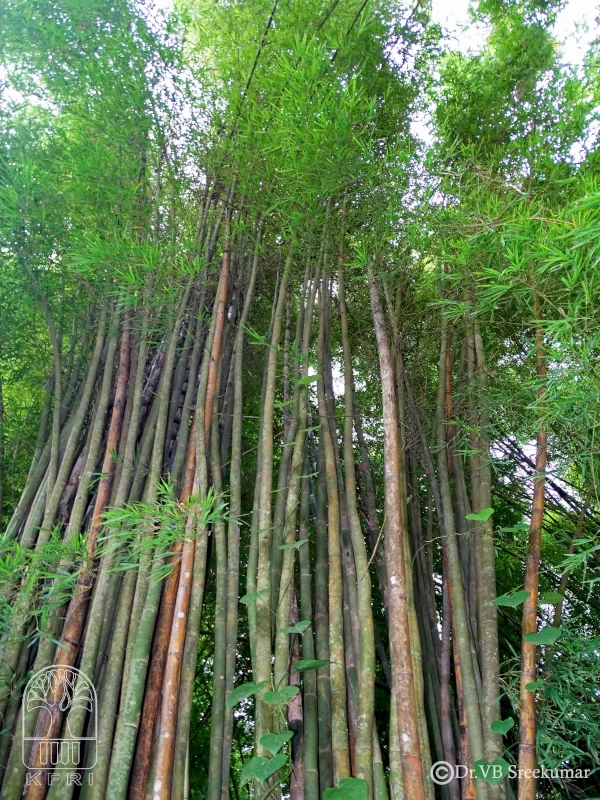
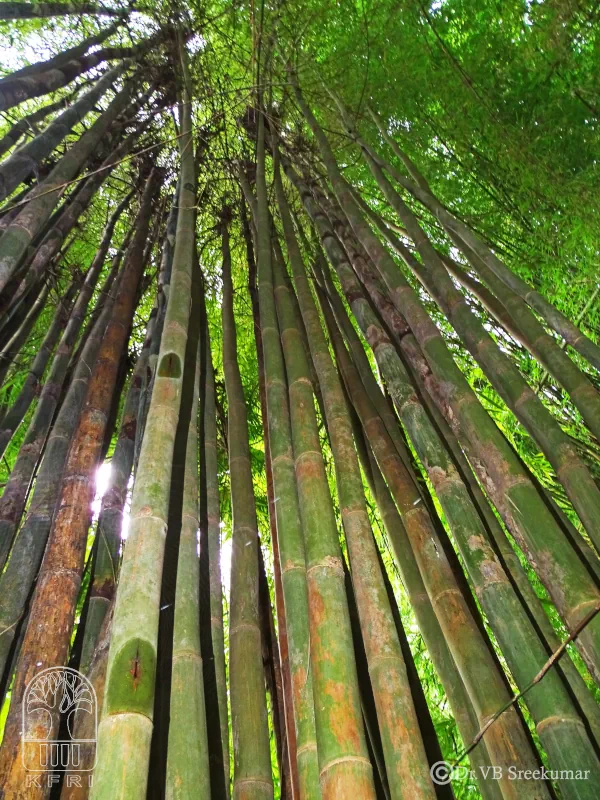
Common name – lathi mulla or korna mula
Usage – constructlon,Furniture, Baskets, Umbrella, Fishing, rods, Spon Roods, Edible shoots, Ladders, “Thottl”, Soil conservation – can survive seasonal Hooding & bioremediation
Thyrsostachys oliveri is a species of edible-seeded bamboo from Yunnan, Myanmar, Laos and Thailand; and also naturalised in Assam and Bangladesh. As a moderately large species of bamboo with tall and straight culms has also been a local source of material for construction in some southeast Asian regions. Bamboos belong to the tribe Bambuseae of the family Poaceae. A total of about 128 species belonging to 18 genera are reported to grow in India where they cover an estimated 9.5 million ha, about 12.8% of the total forest area of the country. Bamboos are the oldest versatile, organic, natural and renewable raw material used for various purposes as well as its juvenile shoots are used for food in some parts of the world. Bamboo shoots are low in fat and calories but rich in various nutrients and edible fibre. Bamboo shoots are a good source of potassium, a heart-healthy mineral, and also contain lignans and phenolic acids which have anticancer, antibacterial, antifungal and antiviral activity. Although India is the second largest resource of bamboos, next only to China, there is hardly any commercial cultivation of bamboos for harvesting of edible shoots. Infact, bamboo seems to be underexploited for edible purpose, and is being used primarily as a source of timber and fiber. In India, there is very little knowledge about using bamboo shoots as food except in the North-Eastern part of the country. Also, there are problems in the identification of bamboo species in field which hinders their judicial utilization and conservation. It was with this aim that the present study was undertaken for two exotic species of the genus Thyrsostachys. The leaf anatomical study showed that the two species possess unique features which help in the characterization and identification of each species and hence their proper utilization as food. The juvenile shoots of these species are rich in various nutrients like amino acids, proteins, carbohydrates, dietary fibre, vitamin C and minerals and have a low fat content. The present study recommends the commercial exploitation of these species. Bamboos have an interesting method of growth. Each plant produces a number of new stems annually – these stems grow to their maximum height in their first year of growth, subsequent growth in the stem being limited to the production of new side branches and leaves. In the case of some mature tropical species the new stem could be as much as 30 metres tall, with daily increases in height of 30cm or more during their peak growth time. This makes them some of the fastest-growing species in the world.
Bamboos in general are usually monocarpic, living for many years before flowering, then flowering and seeding profusely for a period of 1 – 3 years before usually dying.



Leave a Reply