Ochlandra Travancorica
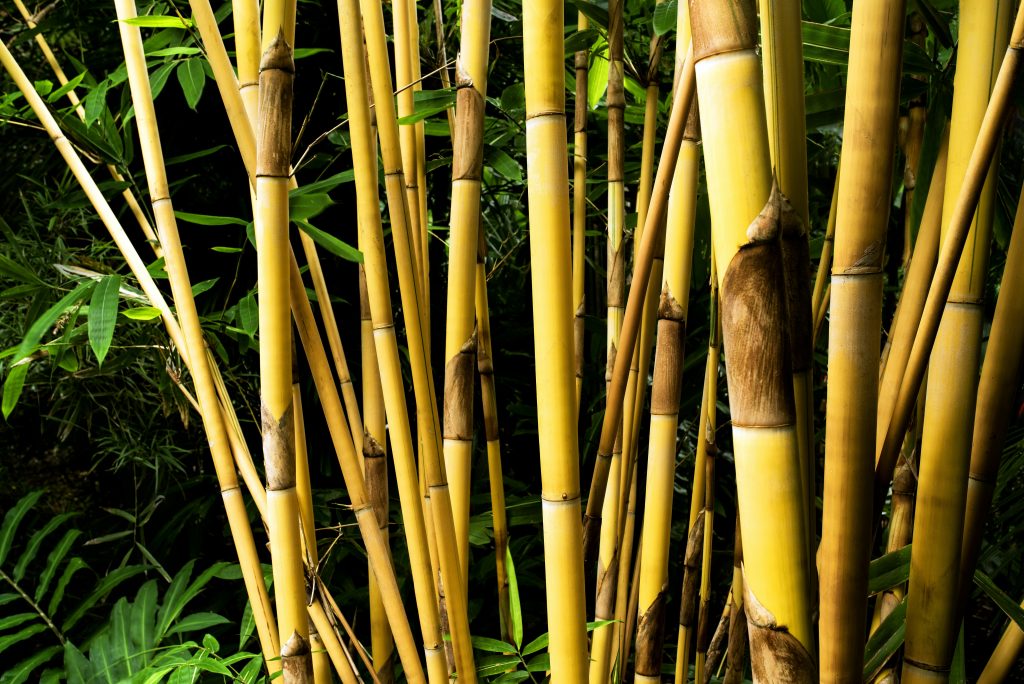
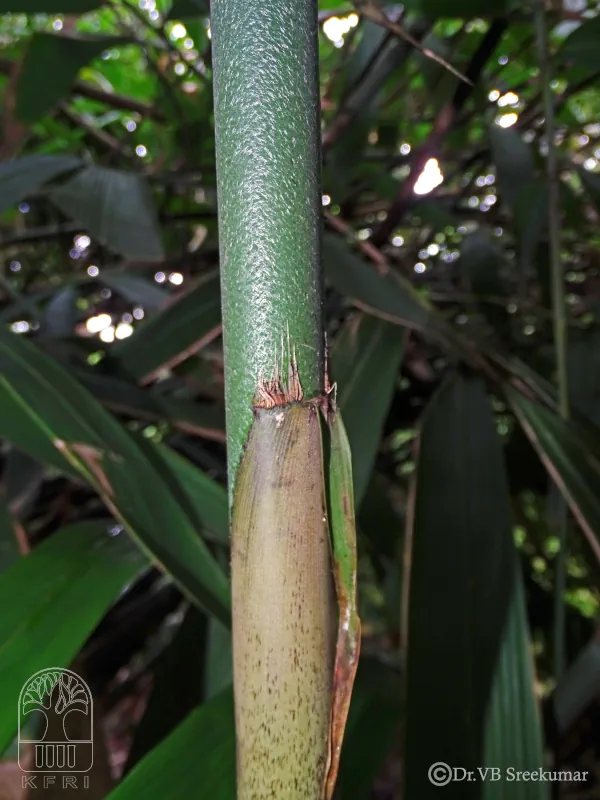
Common name – Reed variety· Elephant grass
Usage – strong currents, Mats, Baskets, Umbrella handles, Fishing rods, Handicrafts and for making the Walls of Huts
Ochlandra travancorica is a vigorous, shrubby bamboo that forms dense, impenetrable thickets across the moist evergreen forests and riverbanks of the southern Western Ghats. Growing to heights of up to six metres, its culms are notably grayish-green and hollow, possessing a unique combination of flexibility and tensile strength that makes them indispensable for traditional rural life. Unlike many woody bamboos, its leaves are exceptionally large and broad, creating a heavy, drooping canopy that provides essential shade and moisture retention for the forest floor. This species is perhaps most famous for its irregular flowering cycle, which occurs every seven to thirty years; after this massive reproductive event, the entire parent clump dies, leaving behind large, fleshy, beak-shaped fruits that quickly germinate to start the next generation. These fruits and the tender young shoots are highly nutritious, serving as a primary food source for wild elephant populations and a seasonal vegetable for local communities. Beyond its biological quirks, the reed acts as a natural engineering tool for the landscape, as its sprawling, matted root systems grip the soil so tightly that they can withstand the most violent monsoon floods, making it a cornerstone species for riverbank stabilization and watershed protection. A plant of the tropics, where it is found at elevations up to 1,500 metres. It requires a mean annual rainfall of more than 1500 mm.
Prefers a position in diffused light. Requires good drainage for proper growth.
Seedling plants take 6 – 8 years to develop into full clumps, which then can last for a period of 25 years.
Bamboos have an interesting method of growth. Each plant produces a number of new stems annually – these stems grow to their maximum height in their first year of growth, subsequent growth in the stem being limited to the production of new side branches and leaves. In the case of some mature tropical species the new stem could be as much as 30 metres tall, with daily increases in height of 30cm or more during their peak growth time. This makes them some of the fastest-growing species in the world.
The sprouting season for new culms is usually after pre-monsoon showers and during rainy season. The height growth of each culm is completed within two months. One year growth is sufficient for a culm to attain full size.
A comparative study for two years on growth of plants raised from seedlings and rooted cuttings showed 76 to 85% survival. Average 5 culms are produced from seedlings and 9 culms from the cuttings. The average height of culms in seedlings is found to be 93 cm and in cuttings 160 cm.
Bamboos in general are usually monocarpic, living for many years before flowering, then flowering and seeding profusely for a period of 1 – 3 years before usually dying. The plant flowers gregariously every 30 to 40 years, then dies down. Another report says that it flowers every 7 years, but recorded dates of flowering are more random



Leave a Reply