Dendrocalamus brandisii
Common name – Velvet Leaf Bamboo
Usage – Handicrafts and construction
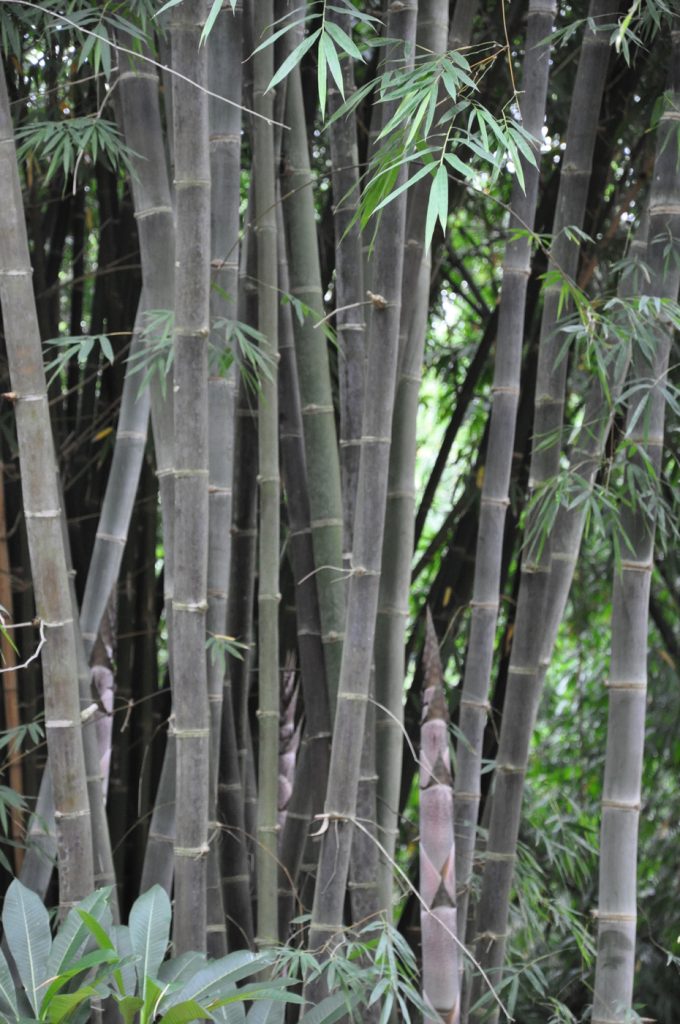
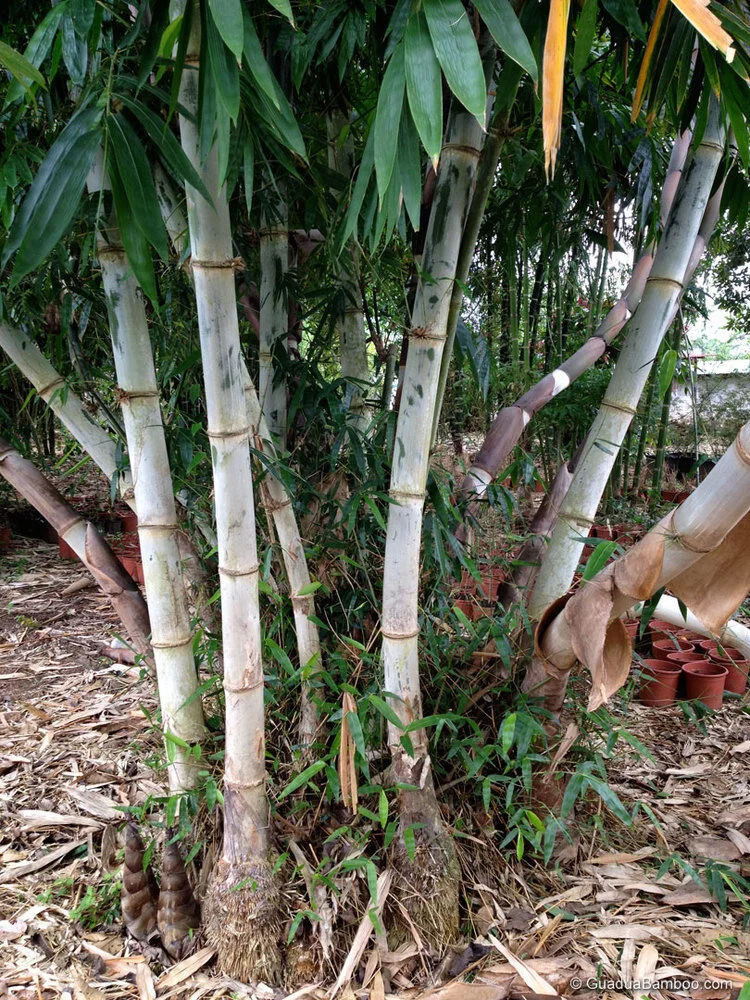
Dendrocalamus is a tropical Asian genus of giant clumping bamboos in the grass family. It is found in the Indian subcontinent, China, and Southeast Asia. A very tall, large-culmed, greyish-green bamboo, it grows in clumps consisting of a large number of closely growing culms, and typically reaches a height of 30 m (98 ft), but one clump in Arunachal Pradesh, India reached a height of 42 m (138 ft); the culms can also be up to 28 cm (11 in) thick, measurements exceeded only by Dendrocalamus sinicus. Under favourable conditions, it can grow up to 40 cm (16 in) per day. The record for the species, 46 cm (18 in) in 24 hours, was set on July 29–30 of 1903 at Peradeniya Royal Botanical Gardens in Ceylon (Sri Lanka).[obsolete source] There have been reports of growth up to 1 m (3 ft 3 in) in 24 hours. In subtropical climates, it does not grow as tall, usually reaching a height of 20 m (66 ft). The culms are straight, and greyish-green with a powdery appearance, becoming brownish-green on drying, with a smooth surface. The young shoots are blackish purple. Internode length is 25–40 cm, and diameter is 10–35 cm. Culm walls are thin, rarely exceeding 2.5 cm (0.98 in) in thickness branching only at the top. Aerial roots occur up to the eighth node. The rootstock is stout. The culm sheath is greenish when young, becoming dark brown when mature. Sheaths are large and broad, length of sheath proper 24–30 cm, and width is 40–60 cm. The blade is triangular, 7–10 cm long. The top of the sheath is rounded. Auricles are small, equal, and crisped. The upper surface of the sheath is covered with stiff, gold and brownish hairs. The under surface is glossy, and not hairy. Sheath fall off is early.A plant of the warm, moist tropics, where it can be cound at elevations up to 1,300 metres.
The plant is frequently found on limestone, but it also grows well on well-drained loamy soils.
Bamboos have an interesting method of growth. Each plant produces a number of new stems annually – these stems grow to their maximum height in their first year of growth, subsequent growth in the stem being limited to the production of new side branches and leaves. In the case of some mature tropical species the new stem could be as much as 30 metres tall, with daily increases in height of 30cm or more during their peak growth time. This makes them some of the fastest-growing species in the world. The young shoots of this species emerge above the soil during the rainy season and develop to their full height in 4 – 6 months. After that the lateral branches start to develop. A culm becomes mature in 3 – 4 years.
Bamboos in general are usually monocarpic, living for many years before flowering, then flowering and seeding profusely for a period of 1 – 3 years before usually dying. Very often, all the specimens of one species in a given area will all come into flowering at the same time. This species flowers sporadically as well as gregariously. Its life cycle is not known; in India an interval of 45 – 50 years between two gregarious flowerings has been reported.



Leave a Reply